


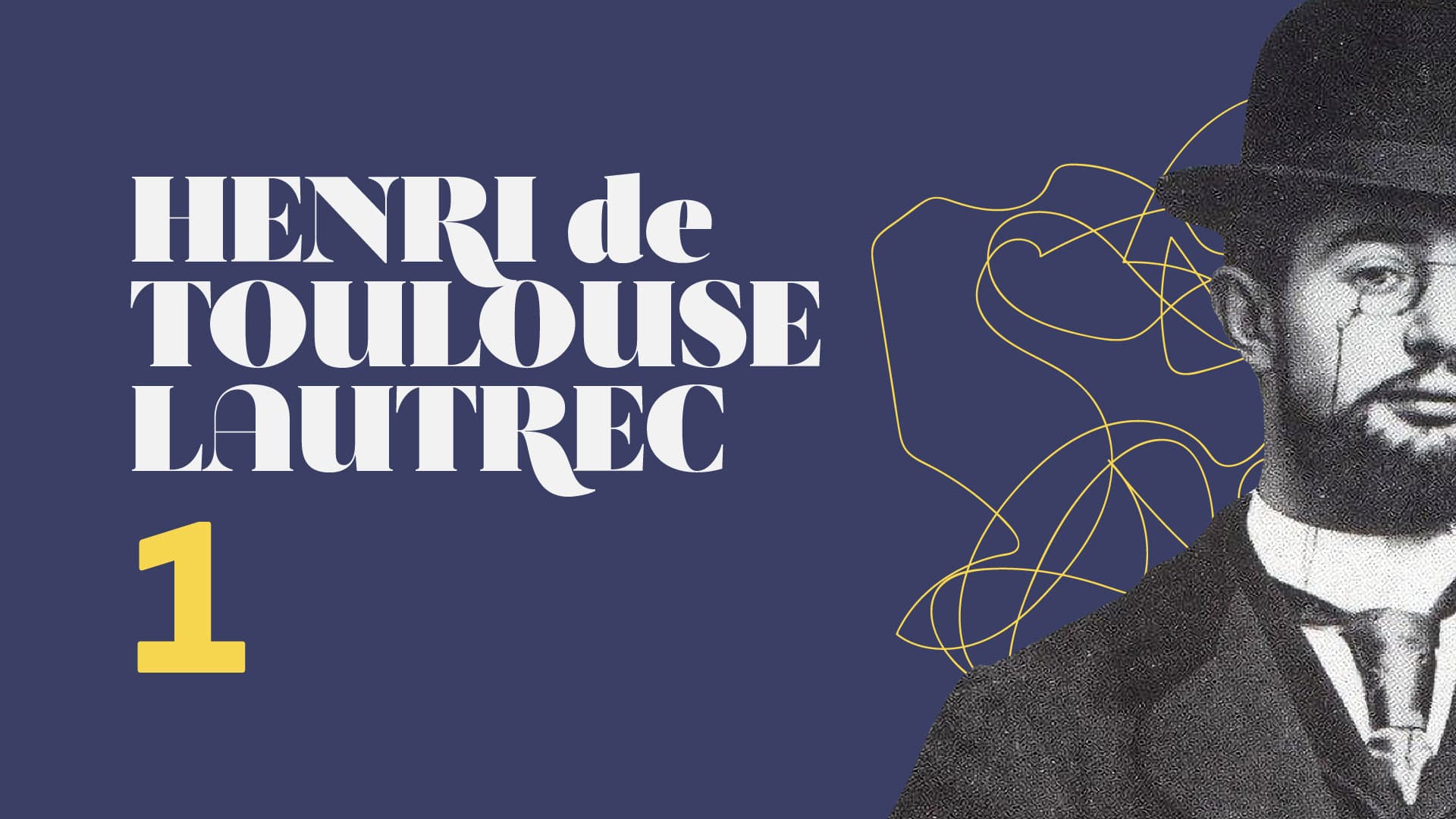
Toulouse Lautrec and Andy Warhol
Henri de Toulouse-Lautrec was a diminutive, alcoholic aristocrat known for his dissolute lifestyle, and his art is forever inextricably linked to his legendary life.His career, cut short by his untimely death, coincided with two important developments in late nineteenth-century Paris: the birth of the modern printing press, and the explosion of nightlife culture. Lautrec's posters showcase the inhabitants of Montmartre like celebrities, and elevate the popular medium of lithography into the realms of fine art. His paintings of ballet dancers and prostitutes are deeply human and personal, revealing the sadness and humor concealed beneath the recentlyinvented rice powder makeup and electric lights. Despite his brief career, he has had a lasting influence.We might even say that without Lautrec, there could have been no Andy Warhol, another artist extremely drawn to the potential of advertising posters, the world of the lower classes, and show business. There are other interesting parallels between Andy Warhol and Toulouse-Lautrec: they were both enigmatic, immediately recognizable figures living in a bohemian environment, obsessed with celebrity, and produced printed works that embodied the relationship between art, theater and commerce.A focus on people at the margins of society - portrayed in a manner at once sympathetic and caricaturistic - was another thing the two artists had in common, and was probably rooted in both men's own feelings of inadequacy (for Lautrec this undoubtedly meant his physical shortcomings; Warhol, although obsessed with his acne, mostly worried about his socioeconomic status and his sexuality). From an artistic perspective, there is another similarity between Toulouse-Lautrec and Warhol: the repetition of their subjects. In Lautrec's prints, the same characters recur obsessively. These people were surely regulars in the environments he painted, but their constant presence throughout his work betrays something more than just a weakness for the allure of celebrity, subtly evoking Warhol's serigraphs of Marilyn Monroe, without their monotony. Finally, both artists were not mere observers of popular culture, but were personally involved in it, by actively creating it and by inserting it into the larger economic systems of art. This last aspect may illustrate one key difference between the two: Warhol was aware of the relationship between pop culture and the market, and exploited the economic system to his advantage, while Lautrec was unaware of it.
Toulouse Lautrec and Andy Warhol
--:--
--:--