


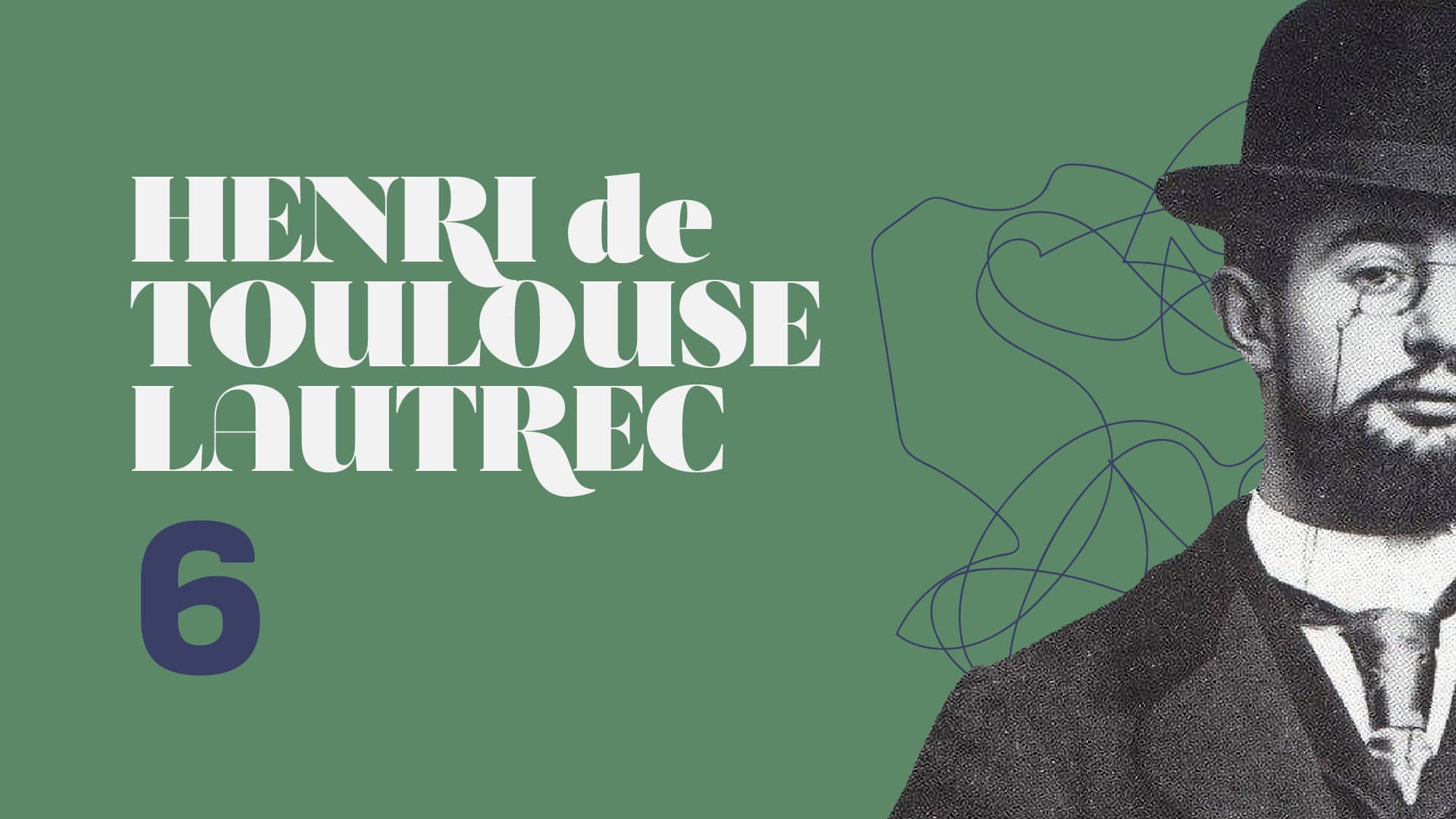
Toulouse-Lautrec and the circus
Another major theme in Henri de Toulouse-Lautrec's work is the circus, a subject he returned to at the end of both the 1880s and the 1890s. Fin-de-siècle Paris was home to a number of professional circuses, and Lautrec was a regular at almost all of them.Lautrec was fascinated by the circus performers: horses and riders both clad in vibrant colors, animal trainers, clowns and acrobats, all on the margins of society. While he was in treatment for alcoholism in a sanatorium on the outskirts of Paris, he did a series of drawings in pastel and chalk - later reproduced as serigraphs and on display in this exhibition - that perfectly capture various circus scenes: horses and riders performing the "pas espagnol", the style of dressage created by the Spanish Riding School in Vienna; clowns training elephants and puppies or acting out skits, acrobats, contortionists, strongmen and ballerinas, all seen through the eyes of the privileged spectator Lautrec. These circus drawings also got Lautrec released from the sanatorium: their impressive artistic skill, especially for drawings done from memory, convinced the doctors that his health had improved. When Lautrec left the clinic, he is said to have remarked:"I bought my freedom with my drawings". Lautrec also chose the circus theme in 1895, when the art dealer Siegfried Bing commissioned him to design a stained-glass window. Bing had decided to transform his gallery, which specialized in art from the Far East (and where Lautrec had admired his beloved Japanese prints), into a new establishment called "L'Art Nouveau", dedicated to the promotion of the applied arts. After a trip to the United States, where he encountered the famous favrile glass or American glass produced by Louis Comfort Tiffany, he commissioned several artists of the Nabis group along with Toulouse-Lautrec to create designs for polychrome stained-glass panels, to be produced by Tiffany in New York. Lautrec's response was Au Nouveau Cirque, Papa Chrysanthème, a depiction of a Japanese-inspired dance performed at the Nouveau Cirque on rue Saint-Honoré in 1892. In the works on display here, there is a clear majority of circus scenes including horses. Lautrec had been fascinated by the equestrian world since he was a young child, when his long periods of convalescence led him to dedicate himself more and more to art. The critic Matthias Arnold observed that "if he couldn't ride horses, at least he could learn to paint them!". Young Henri was quite familiar with dogs, horses and hunting scenes - his father had a passion for horseback riding - and they were useful for the young painter's education. In 1898, after painting dancers, actors and prostitutes, Toulouse-Lautrec turned his attention to horses, Amazons and the world that revolved around the horse racetrack, making it the subject of that year's prints.Unfortunately the series he planned, entitled Courses, was never completed.
Toulouse-Lautrec and the circus
--:--
--:--